
MaxProtocol — a new era of security for business
It is more than a VPN: a Zero Trust architecture that delivers
- authentication and verification of every connection,
- end-to-end traffic encryption,
- detailed logging of user activity.

The Zero Trust approach keeps the network under control, reduces risk, and protects data across remote work and distributed offices.
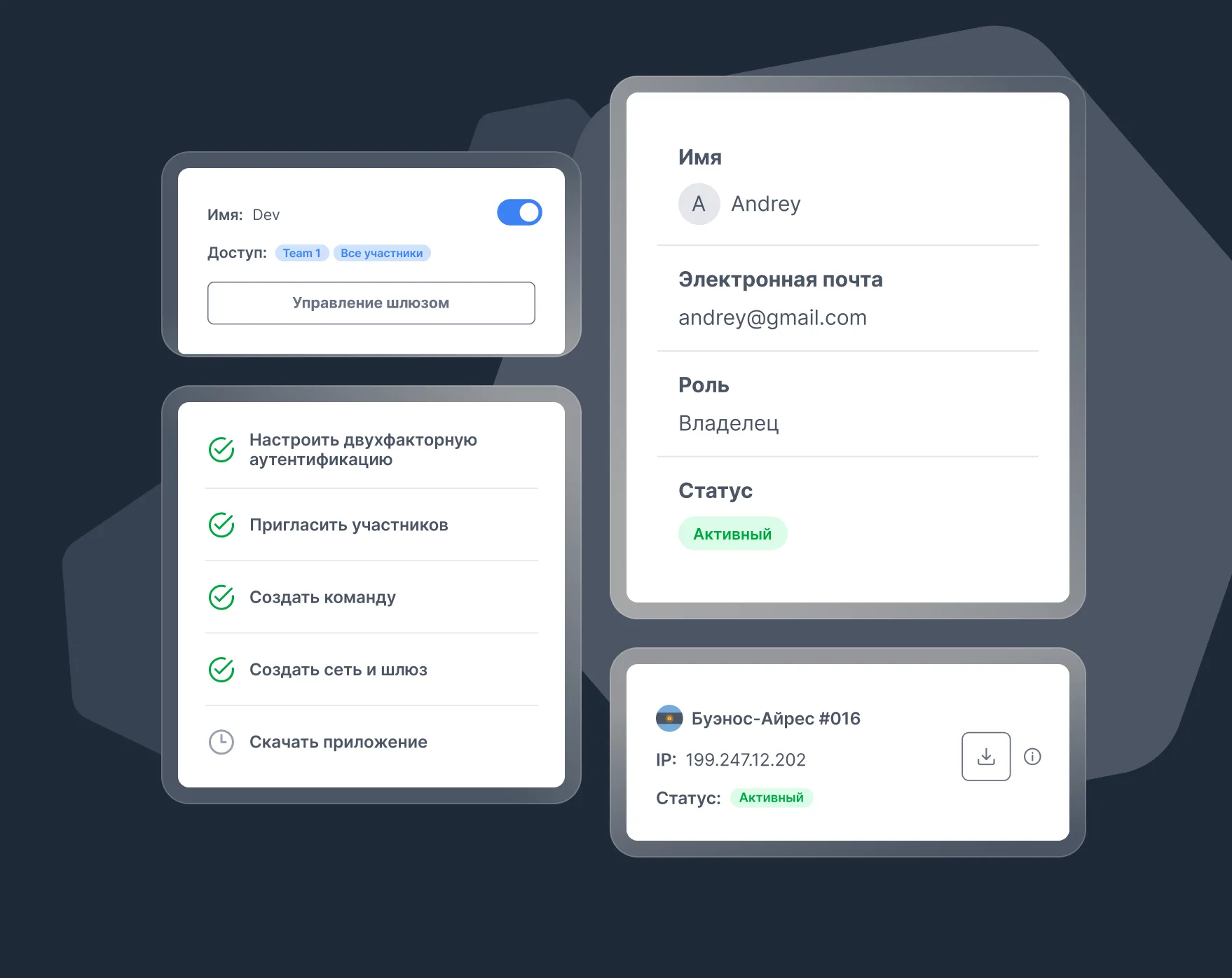
MaxProtocol: secure access in the era of cloud and remote work
MaxProtocol delivers a protected corporate network with flexible access and continuous verification of every connection.

Access without MaxProtocol

Scattered cloud and on-premise resources with no single point of control
Hard to restrict unwanted connections and filter traffic
Risk of access from outdated clients and unverified devices
No centralized logging or visibility into user activity

Access with MaxProtocol

Unified Zero Trust access to corporate resources from anywhere in the world
Centralized access policies: by role, department, geolocation, and time
DNS and content filtering, blocking of unwanted hosts, and traffic redirection
Continuous verification of users and devices
Centralized logging and auditing with flexible settings
MaxProtocol: flexibility and scale
Order exactly as many servers as you need and pay only for those. Every company gets a unique IP that joins its offices and branches into one protected network.
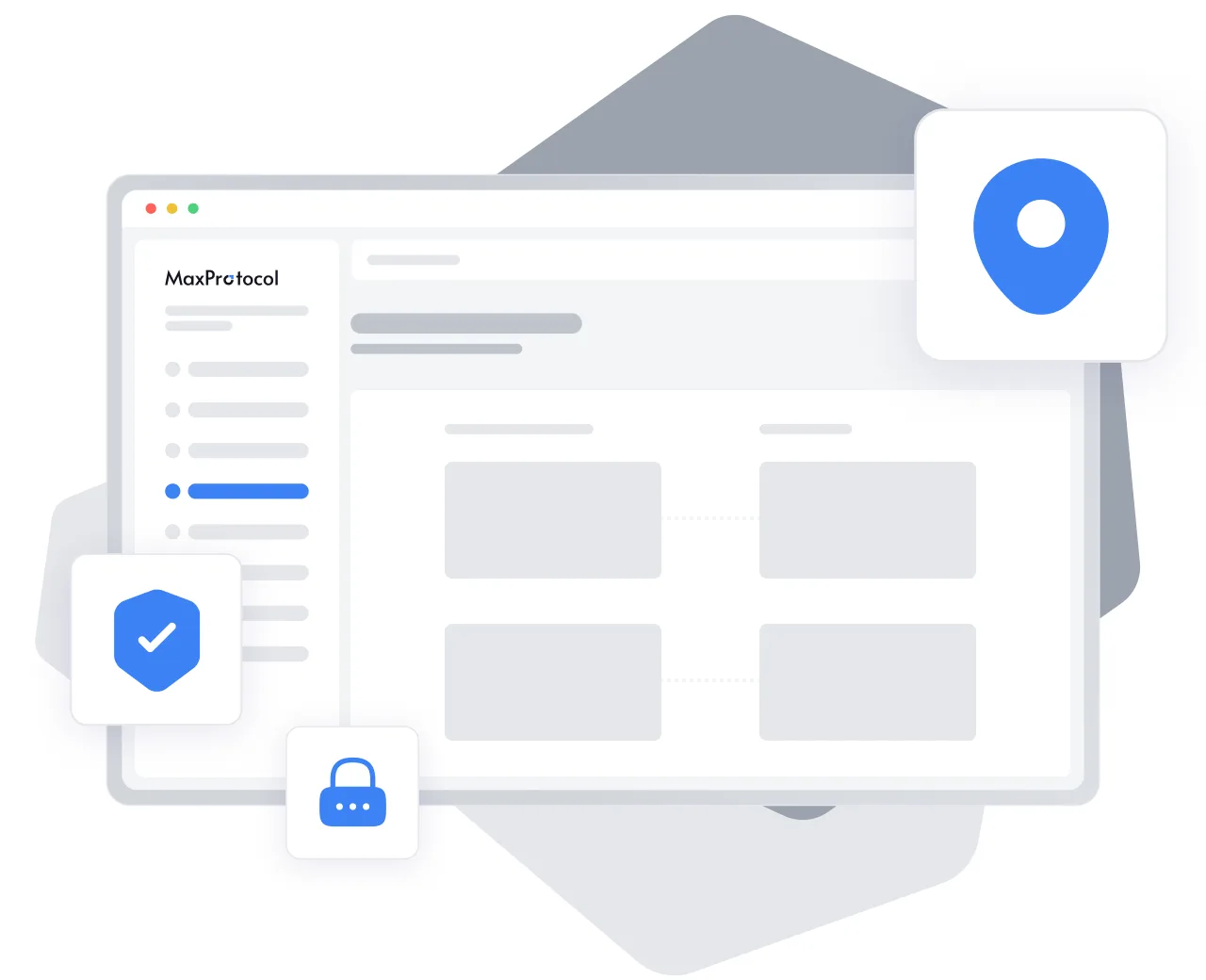

Number of servers
Choose any number of servers — from one to dozens. Scale the infrastructure as the company grows.

Dedicated IP address
Every company gets a dedicated IP address, which guarantees security and control over access.

Office interconnection
Join offices and branches in different countries into one protected corporate network.


Unlimited access with no hidden limits
No traffic or speed caps: the team works in the corporate network at full power, with unlimited traffic, maximum connection speed, and no time limits.
Unlimited access with no hidden limits
The MaxProtocol infrastructure keeps connections stable with no caps on traffic or the number of sessions. IT teams can forecast load and scale the service without unexpected limits.
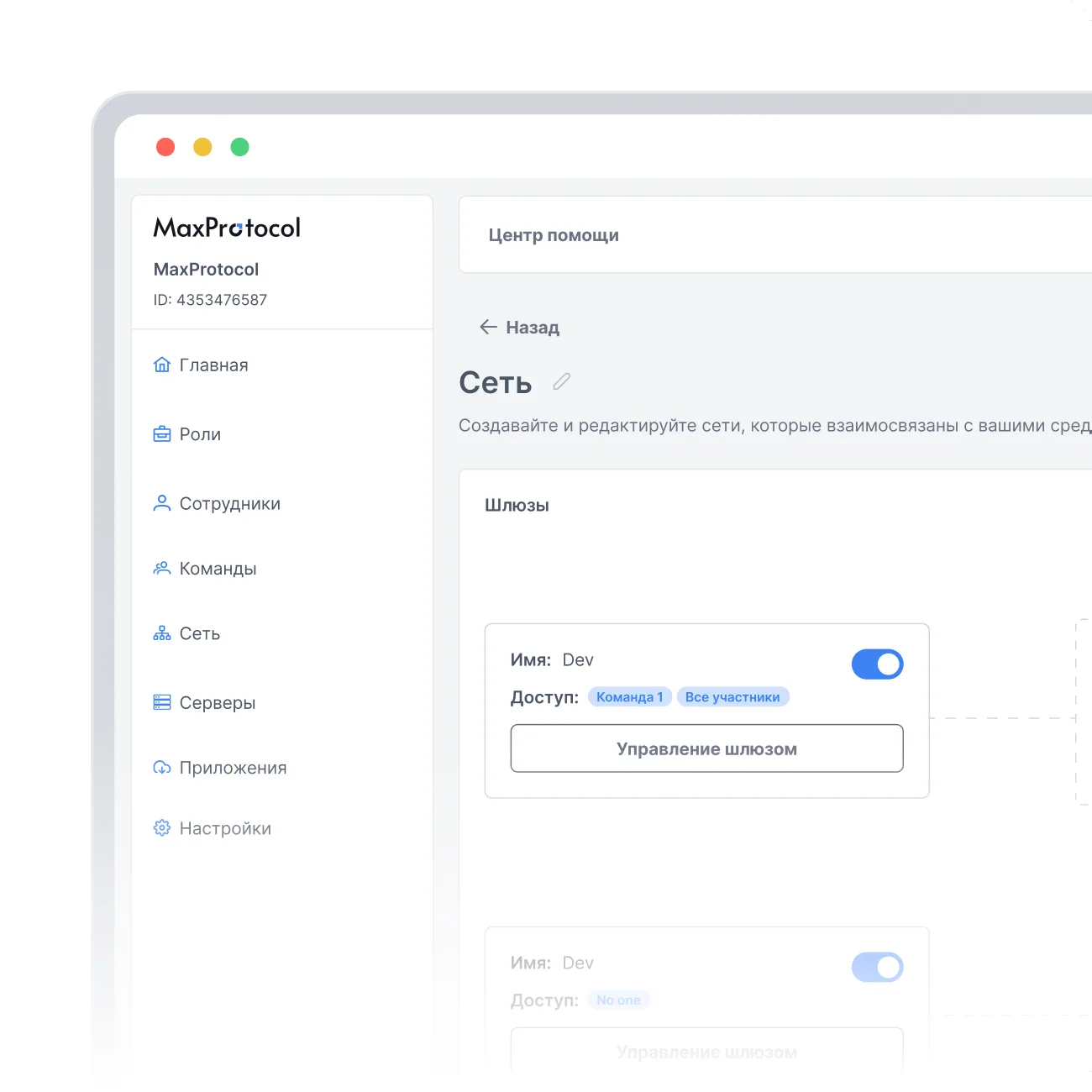
Certified MaxProtocol infrastructure
The infrastructure is certified and ships with built-in protection against network threats. Higher-assurance services are available on top, matching corporate security policies and regulatory standards.
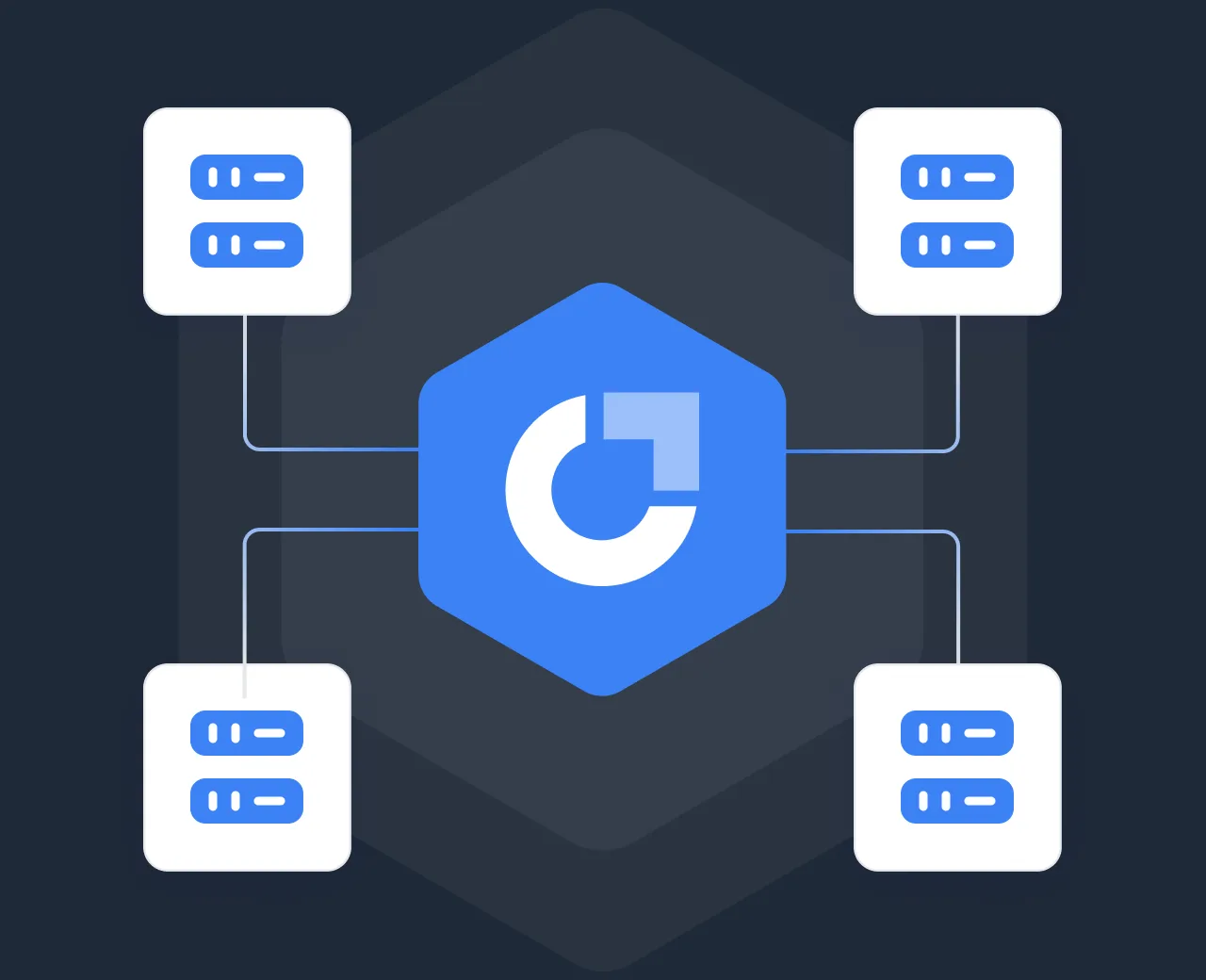
MaxProtocol architecture and operating principles
A corporate VPN in a Zero Trust architecture protects connections, controls access, and records user activity.

When employees connect
MaxProtocol encrypts all traffic and verifies every connection to the corporate network. Data stays protected even over the public internet.

When working remotely
Employees reach company resources securely from anywhere in the world. Zero Trust support guarantees that every login is verified, whatever the device or location.

When accessing applications
Administrators set precise policies: who may connect to the CRM, mail services, or internal systems, and when. That rules out unauthorized access.

When the business scales
New branches and project teams join the infrastructure without complex setup. The VPN scales with load and integrates with the corporate IT environment.

When auditing and monitoring
All user activity is recorded: from login to every request to a specific service. Administrators get the full picture and can spot incidents quickly.
When meeting security requirements
MaxProtocol helps you comply with internal security policies and industry standards. That lowers the risk of leaks and simplifies work with government and enterprise customers.
Frequently asked questions (FAQ)
MaxProtocol is not just a VPN but a Zero Trust platform: it verifies every user and device before the connection, filters traffic, and records activity in the network. A regular VPN only builds a tunnel and cannot tell who is reaching which resources.
Yes. Employees reach corporate resources from any country while the access policies stay in force: every login is verified, whatever the device or location.
Access is granted by role, department, geolocation, and working hours; connections are encrypted end to end; and logins are confirmed with two-factor authentication. Every request to a service lands in the audit log.
Yes. Cloud services and on-premise servers join the same protected network with a single point of control, so access to both is configured in one interface.